Home EV Charger vs. Public Fast Charging: When Does It Pay Off in Vancouver?
Get an estimate in minutes, no commitments
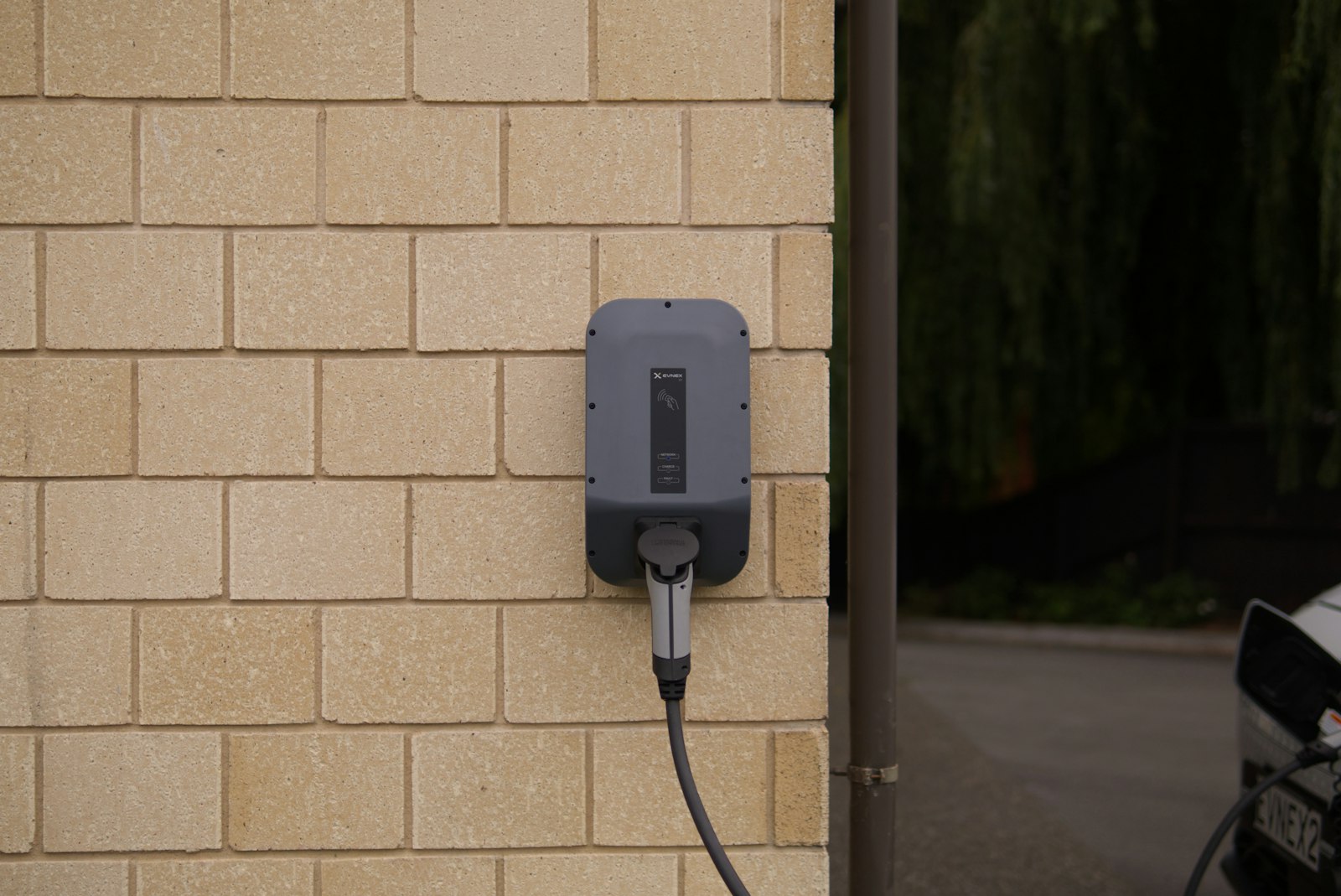
Compare annual charging costs and the payback on three home charger installation scenarios, based on how much you drive in Vancouver.
If you are deciding whether to install an EV charger at home or rely on public stations, the practical answer depends less on the charger itself than on how much you drive and what the installation costs at your home.
Public fast charging is useful for road trips, apartment living, and occasional top-ups. But if you can charge at home overnight, the energy price can be much lower. For many drivers, that difference can repay a straightforward charger installation. For a complex installation, the convenience may still be worthwhile—but the energy-cost payback takes longer.
Quick summary
Using the example below, home charging costs about $0.077 per kWh on BC Hydro’s flat rate with optional overnight time-of-day pricing, while BC Hydro fast charging costs $0.3969 per kWh before tax.[1] [2] [3]
That is a difference of about 32 cents per kWh. At 20,000 km a year, the illustrative driver saves about $1,152 a year on energy by charging at home instead of using public fast charging for every kilometre.
A $1,000 rough-in installation pays back in under a year at that mileage. A $1,900 standard installation pays back in about a year and eight months. A $6,000 complex installation takes about five years and two months on energy savings alone.
The assumptions behind these examples
These are planning examples, not a promise of what every EV or home will cost.
| Assumption | Reference data |
|---|---|
| Vehicle use: | 18 kWh per 100 km. Natural Resources Canada publishes vehicle-specific electricity-consumption ratings in kWh/100 km; check your own vehicle’s rating because larger EVs, cold weather, driving speed, and towing can use more energy.[4] |
| Home charging price: | $0.077/kWh. This combines BC Hydro’s $0.127/kWh residential flat rate with its 5-cent/kWh optional overnight discount for electricity used from 11 p.m. to 7 a.m.[1] [2] |
| Public fast-charging price: | $0.3969/kWh before tax, BC Hydro’s April 1, 2026 fast-charging rate.[3] |
| Comparison: | all driving energy is assumed to come from either home charging or public fast charging. Most real drivers will use a mix, so their actual savings and payback will fall somewhere between these examples. |
The three installation scenarios below are illustrative RenoFiz planning cases for this article. They are not universal market prices:
| Installation scenario | What it includes | Planning cost |
|---|---|---|
| Modern home with EV-ready rough-in | $300 labour + $700 materials | $1,000 |
| Standard house without rough-in | $1,200 labour + $700 materials | $1,900 |
| Complex installation | Longer routing, capacity, building, or site complexity | $6,000 |
What home charging can save each year
At the stated 18 kWh/100 km assumption, every 10,000 km of driving uses 1,800 kWh of electricity. The table compares that electricity bought at home overnight with the same energy bought from BC Hydro fast chargers.
| Annual driving | Annual electricity use | Home charging cost | Public fast-charging cost | Annual energy-cost saving at home |
|---|---|---|---|---|
| 5,000 km | 900 kWh | $69.30 | $357.21 | $287.91 |
| 10,000 km | 1,800 kWh | $138.60 | $714.42 | $575.82 |
| 20,000 km | 3,600 kWh | $277.20 | $1,428.84 | $1,151.64 |
| 30,000 km | 5,400 kWh | $415.80 | $2,143.26 | $1,727.46 |
The point is not that public charging is always a mistake. It is that fast charging is priced for convenience and high-power infrastructure. If your EV sits at home overnight, a home charger can let you buy much of the same driving energy at a lower residential rate.
How long does the charger take to pay back?
This simple payback calculation divides the installation cost by the annual energy-cost saving above. It does not count the charger’s convenience, the time saved at public stations, rebates, maintenance, financing, insurance, or the resale value of the improvement.
| Installation scenario | 5,000 km/year | 10,000 km/year | 20,000 km/year | 30,000 km/year |
|---|---|---|---|---|
| Modern home with EV-ready rough-in — $1,000 | 3.47 years | 1.74 years | 0.87 years | 0.58 years |
| Standard house without rough-in — $1,900 | 6.60 years | 3.30 years | 1.65 years | 1.10 years |
| Complex installation — $6,000 | 20.84 years | 10.42 years | 5.21 years | 3.47 years |
A practical way to read the table
Low-mileage drivers: At 5,000 km a year, convenience may be the stronger reason to install at home. A low-cost rough-in project still has a reasonable energy-cost payback, but a complex project may not pay back quickly through electricity savings alone.
Typical daily drivers: At 10,000 to 20,000 km a year, a straightforward home installation begins to make a clear financial case if it replaces frequent fast charging.
High-mileage drivers: At 30,000 km a year, the energy-price gap becomes meaningful. Even a more involved installation can have a shorter payback if home charging replaces most public fast-charging use.
What this calculation does not mean
Do not read this as a reason to avoid public charging entirely. Public stations are essential when you travel beyond home range, cannot charge where you live, or need a quick top-up. BC Hydro’s public network also includes Level 2 charging at a lower rate than fast charging, and other networks can set different prices.[3]
The calculation also assumes you can actually charge overnight on the BC Hydro rate plan used in the example. Your household may use a different plan, some electricity may fall into a higher tier, and home charging has small efficiency losses. Your vehicle’s official rating, driving conditions, and charging habits will change the result.
The decision is usually strongest when these three things are true: you can park where you live, you drive regularly, and the installation is straightforward enough that it does not require major electrical or building work.
How RenoFiz can help you choose the right path
For a straightforward house project, start with RenoFiz’s EV charger calculator. It helps you describe the charger location, distance from the electrical panel, and the details that may affect an initial cost range.
For a condo, shared parkade, detached garage, long electrical route, or home with other future electrical upgrades, use RenoFiz’s AI project assistant. Describe how and where you park, your driving routine, what you know about the home, and any future plans such as a heat pump or induction range. RenoFiz can help turn that into a clearer project baseline and initial estimate before the appropriate professional connection.
The bottom line
If you mostly rely on public fast charging, a home charger can reduce your driving-energy cost substantially. The simple question is whether the expected savings justify the installation cost for your mileage and home.
A modern home with EV-ready rough-in can pay back quickly. A standard installation can make sense for regular drivers. A complex installation should be evaluated as both a financial and lifestyle decision—not only an energy-cost calculation.
Describe your EV charger project for an instant, personalized estimate.
Want a custom estimate for your project?
Describe the work and get a custom estimate of the likely scope and cost in minutes. A local professional confirms the final details before work begins.