How Much Does a Kitchen Renovation Cost in Vancouver? (2026 Complete Guide)
A comprehensive 5,000+ word deep dive into exactly what drives kitchen renovation costs in Vancouver in 2026, featuring detailed breakdowns of materials, labor, and timeline expectations.
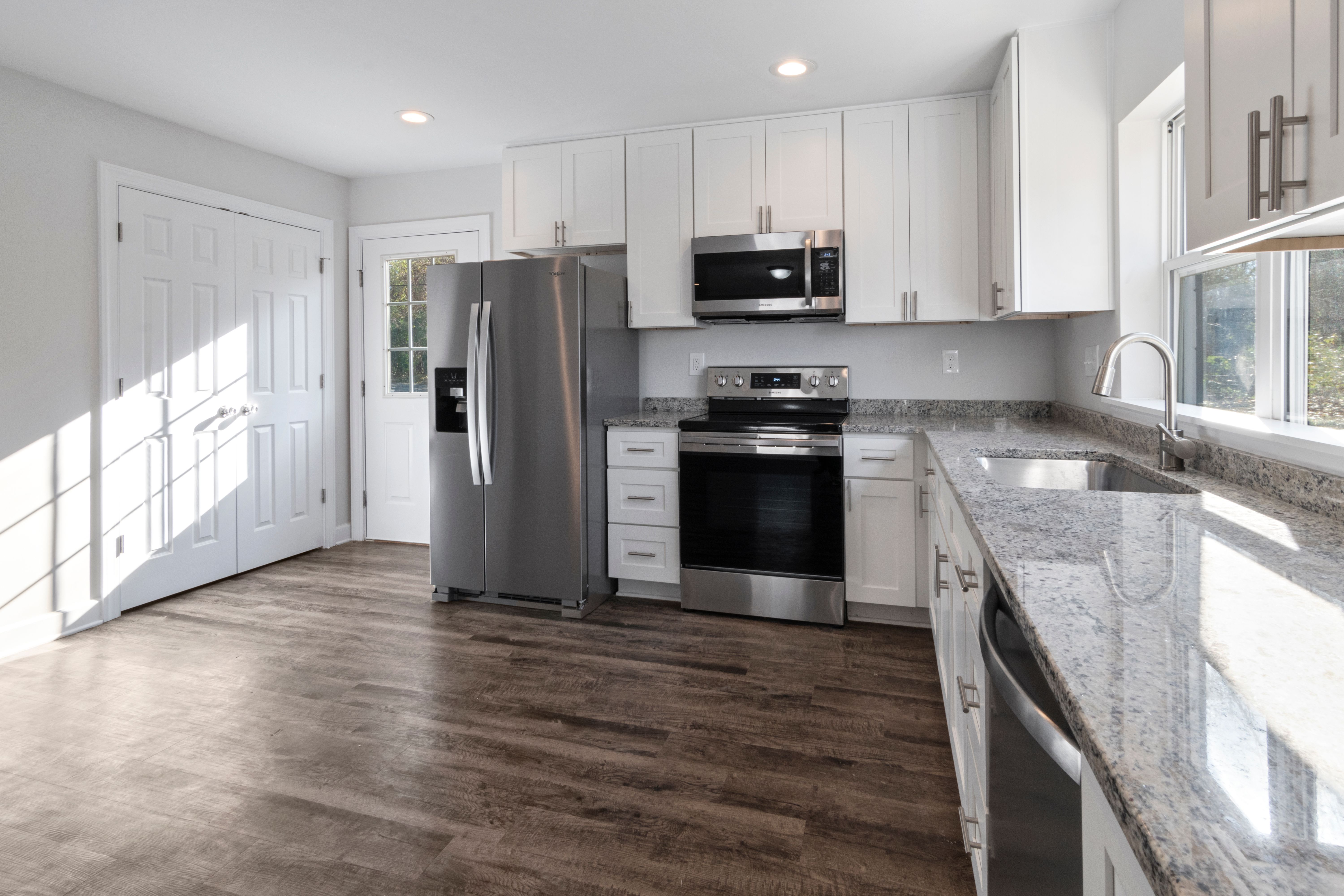
If you're a Vancouver homeowner thinking about a kitchen renovation, you've probably done what everyone does: type "how much does a kitchen renovation cost" into Google. The number you get is usually too vague to plan with or too generic to trust.
The truth is that kitchen costs vary more than almost any other home renovation. The difference between a budget refresh and a full gut renovation in Vancouver can be $70,000 or more — and the deciding factors have almost nothing to do with the size of your kitchen.
This guide breaks down the real costs, the key variables that drive the price up or down, and how to get a detailed, personalized estimate before you commit. We'll cover budget tiers, a full cost breakdown by component, the impact of structural changes and permits, how your choice of appliances and accessories can swing the budget by $20,000+, the added complexity of renovating in downtown Vancouver, and — most importantly — how to get an estimate that's specific to your kitchen, not a national average.
The Real Cost of a Kitchen Renovation in Vancouver Right Now
Here's the short answer: a full kitchen renovation in Vancouver will cost you somewhere between $20,000 and $100,000+, and the reason the range is so wide is that your specific choices matter more than any average. The three variables that swing the price most are your kitchen's square footage, whether you're changing the layout (moving plumbing or walls), and the quality of materials and appliances you choose.
Industry professionals across Metro Vancouver use a $500–$1,500 per square foot benchmark for kitchen renovations in 2026. A 150 sq ft kitchen at the mid-point of that range lands around $75,000–$110,000 depending on finish level. A 70 sq ft condo kitchen with standard finishes and no layout changes is a very different project from a 200 sq ft open-concept renovation with quartz countertops and custom cabinetry throughout.
The $/sqft metric is useful as a sanity check, but it has limitations. A renovation with $40,000 in fixed costs (permits, appliances, minimum trade charges) will have a much higher per-square-foot cost on a 70 sq ft kitchen than a 200 sq ft one, even if the finishes are identical. Use it as a ballpark, not a precise formula. The real variable is what you put into the space, not just how much space you have.
Three Ways to Budget for Your Kitchen Reno
Vancouver kitchen renovations fall into three clear tiers based on scope and finish quality. Which tier you choose depends on your home's current condition, how long you plan to stay, and what you're trying to achieve — a quick sale-ready update is different from a forever-home dream kitchen.
| Budget Tier | Cost Range (2026) | What You Get |
|---|---|---|
| Basic Refresh | $15,000–$25,000 | Cabinet refacing or painting, new laminate countertops, standard appliances, new sink and faucet, updated hardware and paint. No structural changes, no layout changes. 1–2 weeks of work. |
| Mid-Range Full Renovation | $35,000–$90,000 | New semi-custom cabinets, quartz or granite countertops, new mid-range appliances, new flooring, new backsplash, updated lighting. You're keeping the same layout but replacing everything visible. 4–8 weeks. |
| High-End / Custom | $100,000–$185,000+ | Custom millwork, premium stone (quartz, marble, or porcelain slab), professional-grade appliances, custom hood vent, under-cabinet lighting, pot filler, heated floors. Structural changes — moving walls, relocating plumbing and electrical, reconfiguring the layout. 8–14 weeks. |
How Kitchen Size Changes the Math
Yes — significantly. A 100 sq ft kitchen with mid-range finishes typically costs $40,000–$55,000. The same finish level in a 200 sq ft kitchen reaches $75,000–$90,000. Kitchen size is one of the most reliable predictors of total renovation cost, and the per-square-foot benchmark scales almost linearly in Metro Vancouver. However, the relationship isn't perfectly linear because some costs are fixed regardless of size — permits, appliance costs, and minimum trip charges for trades don't double when you double the square footage.
Condo Kitchens vs House Kitchens — Different Challenges
Condo kitchens often carry hidden costs that house kitchens don't. If your building requires an elevator for material deliveries, you may need to book time slots and pay for extended usage. Some condos have restrictions on when renovation work can happen (quiet hours, no weekend work), which can extend timelines and increase labour costs. Strata approval processes can add 2–6 weeks of delay before work even starts. And many Vancouver condos were built with non-standard cabinet sizes that make stock cabinets difficult to fit, pushing you toward semi-custom or custom cabinetry.
On the other hand, condo kitchens are typically smaller, so the base square footage cost is lower. The trade-off is a higher per-square-foot rate due to the complexity factors above.
Where Your Kitchen Renovation Budget Actually Goes
Here's how a typical $60,000 mid-range kitchen renovation budget breaks down by component:
| Component | % of Budget | Estimated Cost on $60K |
|---|---|---|
| Cabinets and Millwork | 30–40% | $18,000–$24,000 |
| Labour (construction, install, finishing) | 20–35% | $12,000–$21,000 |
| Countertops | 10–15% | $6,000–$9,000 |
| Appliances | 15–20% | $9,000–$12,000 |
| Flooring | 5–8% | $3,000–$5,000 |
| Backsplash and Tiling | 3–5% | $1,800–$3,000 |
| Lighting and Electrical | 3–5% | $1,800–$3,000 |
| Plumbing | 2–4% | $1,200–$2,400 |
| Permits and Fees | 2–3% | $1,200–$1,800 |
These percentages shift depending on the quality level you choose. Splurging on appliances pushes that category higher. Choosing stock cabinets reduces the cabinetry percentage. The labour percentage tends to stay relatively stable because it's driven by the size and complexity of the project, not the cost of materials — a $60,000 kitchen and a $100,000 kitchen may have similar labour costs if the scope of work is the same; the difference comes from materials.
One common mistake is underestimating the labour component. Vancouver trade rates of $65–$120 per hour add up quickly. A full kitchen renovation typically involves 150–300 hours of combined labour across 3–5 trades. Even at the low end, that's $10,000–$20,000 before you've bought a single cabinet or countertop.
Cabinets: The Decision That Drives Everything
Cabinetry is consistently the single largest line item, accounting for 30–40% of a full kitchen renovation budget. In Vancouver, expect to pay:
Stock cabinets: $3,000–$10,000 — fixed sizes, particle board or basic MDF boxes, limited finishes. Available immediately or within 2–4 weeks.
Semi-custom cabinets: $8,000–$20,000 — built-to-order boxes with your choice of door style, wood species, and finish. Lead time: 4–6 weeks.
Custom cabinets: $15,000–$35,000+ — built to your exact specifications by a cabinetmaker. Unlimited options for wood, finish, hardware, and storage inserts. Lead time: 8–12 weeks.
The cabinet decision drives more of your budget than any other single choice. Going custom over stock can add $12,000–$25,000 to the total project cost. But custom cabinets also use better materials (plywood boxes instead of particle board, dovetail joinery instead of staples) that last 25–40 years. It's a durability decision as much as an aesthetic one.
The invisible difference is the box construction. Stock cabinets typically use particle board boxes with cam lock fasteners and stapled drawer boxes. Semi-custom and custom cabinets use plywood boxes with dovetail joinery, full-extension drawer slides, and soft-close hinges as standard. If you plan to stay in your home for 10+ years, upgrading from stock to semi-custom is one of the highest-value decisions you can make.
Cabinet lead times matter too. Stock cabinets are available in 2–4 weeks. Semi-custom takes 4–6 weeks. Custom can take 8–12 weeks or longer. If you're on a timeline, this is the first decision you need to lock in — everything else (countertop templating, appliance ordering, flooring) can be sequenced around the cabinet delivery date.
Appliances and Accessories That Add Cost
Appliances are the biggest swing factor after cabinets. Two same-sized kitchens with the same countertop and cabinet grade can differ by $15,000–$25,000 purely based on appliance and accessory choices. Here's how the tiers break down:
| Appliance | Tier | Cost Range |
|---|---|---|
| Refrigerator | Standard: $1,000–$2,000 / Mid-Range: $2,000–$4,000 / Premium: $4,000–$10,000+ | |
| Range/Cooktop | Standard: $1,000–$2,500 / Mid-Range: $2,000–$4,000 / Premium: $4,000–$12,000+ | |
| Dishwasher | Standard: $600–$1,200 / Mid-Range: $1,200–$2,000 / Premium: $2,000–$3,500 | |
| Range Hood | Standard: $300–$800 / Mid-Range: $800–$1,500 / Premium: $1,500–$5,000+ | |
| Total Package | Standard: $3,000–$6,500 / Mid-Range: $6,000–$11,500 / Premium: $11,500–$30,000+ |
Accessories that can add significant cost:
- Panel-ready fridge and freezer columns (matching cabinetry): +$2,000–$6,000 over standard freestanding units. These create a built-in, seamless look but cost a premium for the custom panel fronts.
- Built-in coffee system: $1,500–$5,000. Increasingly popular in Vancouver mid-range and high-end kitchens.
- Pot filler at range: $300–$800 plus labour for plumbing. A small luxury that requires running a hot water line to the cooktop area.
- Warming drawer: $1,000–$2,500. Common in higher-end kitchens for keeping plates and food warm.
- Beverage or wine fridge: $800–$3,000. Often installed in kitchen islands or butler's pantries.
- Undercabinet lighting (LED strips): $500–$2,000. Transforms the functionality of a kitchen but requires planning and electrical work.
- Heated floors (electric mat): $800–$2,500. Popular in Vancouver kitchens, especially in older homes with cold tile floors.
- Custom hood vent (ducted outside vs recirculating): +$500–$2,000 for proper ducted ventilation. Required by code in many Vancouver renovations.
- Soft-close drawer slides (vs standard): included in mid-range and above, but a $500–$1,500 add-on for budget renovations.
- Pull-out pantry and cabinet organizers: $200–$1,000 per unit. Transforms storage usability.
- Touchless or voice-activated faucet: $300–$1,000 extra over a standard faucet.
The key takeaway: appliances and accessories are where you have the most control over your budget. A standard package with no extras might cost $3,000–$6,500. A premium package with panel-ready fridge, built-in coffee, wine fridge, and heated floors can easily exceed $25,000. Decide what matters to you and allocate accordingly.
The Structural Decisions That Move Your Budget
Yes — this is the single biggest cost multiplier. Keeping your existing layout saves $5,000–$15,000 compared to relocating plumbing or removing walls. Here's what typical structural changes cost in Vancouver:
| Structural Change | Typical Cost Range |
|---|---|
| Relocating sink or dishwasher | $2,000–$5,000+ |
| Adding a new plumbing run for an island sink | $3,000–$8,000 |
| Removing a non-load-bearing wall | $3,000–$8,000 |
| Removing a load-bearing wall (with beam) | $5,000–$15,000 |
| Moving electrical panel | $2,000–$5,000 |
| Upgrading to 200-amp panel | $2,000–$5,000 |
If your kitchen renovation involves removing a load-bearing wall to create an open-concept layout — common in Vancouver's older homes (pre-1980s) — budget an additional $5,000–$15,000 for structural engineering, a new LVL beam, and potential foundation work. Always have a structural engineer assess the wall before demolition.
The wall removal process itself has stages that add cost: engineering drawings ($500–$2,000), temporary shoring during construction ($1,000–$3,000), the beam itself ($500–$3,000 depending on span and material), and finishing work after (drywall patch, floor repair, trim). If the wall contains electrical or plumbing that also needs relocation, add another $1,000–$4,000 for those reroutes.
A common scenario in Vancouver's 1950s–1970s homes: removing the wall between the kitchen and dining room to create an open-concept great room. This typically costs $8,000–$15,000 including the beam, engineering, electrical rerouting, and finishing — before you spend a dollar on cabinets or counters.
Permits, Inspections, and Why They Matter
If you're moving plumbing, electrical, or changing the structure of your home, yes — you need permits. The cost depends on the scope of work and your municipality:
| Construction Value | Vancouver Building Permit |
|---|---|
| $25,000–$50,000 | $800–$1,500 |
| $50,000–$100,000 | $1,500–$2,500 |
| $100,000–$200,000 | $2,500–$4,000+ |
Beyond building permits, you'll typically need:
Electrical permit (Technical Safety BC): $100–$300 for new circuits and lighting. Plumbing permit (Technical Safety BC): $100–$200 for relocating sink, dishwasher, or adding plumbing to an island.
Permit processing time in Vancouver averages 8–12 weeks for standard applications. Factor this into your timeline — you can't start demolition until the permit is issued.
Note: Some homeowners skip permits to save time or money. This is risky in Vancouver. Unpermitted work can surface during a home sale inspection, forcing you to retroactively permit and potentially open walls to verify work. The cost of retroactive permitting in Vancouver can be 2–3x the original permit fee. Insurance companies may also deny claims related to unpermitted work — if an electrical fire starts in a kitchen where unpermitted electrical work was done, your policy may not cover the damage.
The inspection process itself adds value. A building inspector catches issues that even good contractors sometimes miss: incorrect fire stopping, inadequate venting, or improper electrical grounding. Think of permits not as a cost, but as a quality assurance check on your renovation.
Why Vancouver Kitchens Cost More
Vancouver is consistently one of the most expensive cities in Canada for kitchen renovations. Here's how the numbers compare for a mid-range kitchen renovation (150 sq ft, semi-custom cabinets, quartz counters, mid-range appliances):
| City | Mid-Range Cost Range |
|---|---|
| Vancouver | $55,000–$90,000 |
| Toronto | $50,000–$85,000 |
| Calgary | $40,000–$65,000 |
| Montreal | $35,000–$55,000 |
| National Average | $40,000–$70,000 |
Vancouver's premium is driven by three factors:
Labour rates: Vancouver trades charge $65–$120 per hour compared to $45–$80 nationally. Labour represents 20–35% of a renovation budget, so this premium ripples through every line item. A Vancouver kitchen with 200 hours of labour costs $13,000–$24,000 just for the trades — in Calgary that same labour would be $9,000–$16,000.
Material costs: Delivering materials to Vancouver is more expensive than to inland cities. Cabinets, countertops, and flooring all carry a 10–20% Vancouver premium over the national average. Shipping costs to the Lower Mainland, warehouse overhead, and showroom rent in Vancouver's expensive commercial market all get passed on to homeowners.
Permit fees: Vancouver's building permit fees are among the highest in Canada. A building permit for a $50,000 renovation costs $800–$1,500 in Vancouver compared to $500–$800 in Calgary and $400–$700 in Montreal. The gap widens for larger projects.
Demand pressure: Vancouver's consistently high demand for renovation contractors means less price competition. Good contractors are booked 4–8 weeks out and charge accordingly. When supply is tight and demand is high, prices rise — simple economics that Vancouver homeowners feel directly in their renovation quotes.
Renovating in Downtown Vancouver — Added Complexity and Cost
If your kitchen is in a downtown Vancouver condo or home, expect additional costs and complexity that suburban renovations don't face:
Limited on-site storage: Downtown condos and houses have minimal space for material staging. Contractors need to make smaller, more frequent deliveries rather than one large drop. Each additional trip costs time and money.
Parking and loading restrictions: Most downtown Vancouver streets have paid parking or loading zones. Contractors either pay for parking (passed on to you) or park blocks away and carry materials. Both add to labour costs.
Strata permit complexity: Downtown condos require strata approval before any renovation work begins. Many stratas charge an application fee ($200–$500), require a damage deposit ($500–$2,500), and impose specific working hours. The approval process can take 2–6 weeks.
Elevator booking delays: In high-rise buildings, material deliveries and debris removal require elevator bookings. If the building has limited elevator access, this can extend your timeline by days or weeks.
Noise bylaw restrictions: Vancouver's noise bylaw restricts construction to specific hours (typically 7:30am–8pm weekdays, 10am–8pm weekends). Downtown enforcement is stricter, and fines for violations can reach $500–$2,000, often passed to the homeowner.
Trades premium: Many trades prefer suburban work where parking is free and access is easy. Downtown projects often require a premium of 10–20% on labour to attract quality crews.
All told, a downtown Vancouver kitchen renovation typically costs 15–25% more than the same project in a suburban home — before you even choose your finishes.
How to Get Your Personalized Estimate
Generic cost guides can tell you what a kitchen typically costs in Vancouver. But your home isn't "typical" — your kitchen has its own layout, your material preferences are specific, and your scope of work is unique.
That's where RenoFiz's AI estimator comes in. Instead of trying to reverse-engineer a budget from someone else's renovation, you get an estimate built from your actual project details.
Describe your project to Chris, RenoFiz's AI project assistant. Chris asks targeted questions about your space: the square footage, whether you're keeping the same layout or moving walls, what cabinet grade and countertop material you're considering, what appliance level you're targeting, and whether any accessories matter to you — undercabinet lighting, heated floors, a pot filler. Share photos, and Chris factors visible conditions into the estimate — that old backsplash that needs demo, the non-standard ceiling height, the cramped layout. What a static calculator can't see, Chris can account for.
The result is a line-item estimate specific to your project — not a range from a national database. You review, adjust, and approve it. Then RenoFiz matches you with a vetted contractor who starts from your approved scope and price.
Not a ballpark — a plan.
Stretching Your Dollar Without Sacrificing Quality
Invest in the bones, save on the cosmetics. The structural decisions — cabinets, counters, layout — determine 80% of how your kitchen functions and how long it lasts. Appliances, fixtures, and accessories can be upgraded later. A plywood-box semi-custom cabinet lasts 25–40 years. A $3,000 fridge will cool your food just as effectively as a $10,000 one.
Keep plumbing where it is. Relocating a sink costs $2,000–$5,000. Keeping the same plumbing layout saves that money for finishes that matter to you.
Choose quartz for durability. Quartz is the Vancouver standard for mid-range kitchens because it's durable, low-maintenance, and consistent in colour. Granite needs annual sealing. Marble stains. Quartz delivers 90% of the aesthetic for 60% of the premium stone cost.
Consider mid-tier appliances. Mid-range brands ($600–$2,000 per appliance) deliver the same aesthetic and functionality as premium lines for $3,000–$5,000 less. The exception is the range hood — invest in a quality ducted hood, as it directly affects indoor air quality.
Don't skip the contingency. Budget 15–20% contingency on top of your estimate. In older Vancouver homes (pre-1970), walls often hide surprises: knob-and-tube wiring (costs $2,000–$8,000 to replace), corroded cast iron plumbing ($3,000–$8,000), non-standard stud spacing that makes cabinet fitting harder, and asbestos in flooring or ceiling tiles ($2,000–$5,000 for abatement). That contingency is your safety net, not a slush fund — and in a pre-1970 Vancouver home, you're more likely to use it than not.
Another value hack: phase your renovation. If your budget is tight, do the structural and cabinet work now (which is hard to change later) and plan to upgrade appliances, backsplash, or lighting in 1–2 years. The RenoFiz estimate can be revisited when you're ready for phase two, with the same baseline and contractor relationship already established.
Kitchen Renovation Budget Checklist
Planning Phase:
- Set realistic total budget with 15–20% contingency included
- Decide on layout changes — keeping plumbing in place saves $5,000–$15,000
- Choose cabinet grade (stock / semi-custom / custom) — this drives 40% of the budget
- Research appliance package and accessory costs
- Check if permits are required for your scope of work
Pre-Construction Phase:
- Cabinet order placed 6–10 weeks before installation date (longest lead time item)
- All permits submitted and approved before demolition begins
- Strata approval obtained (if applicable)
- Elevator bookings confirmed (if in a condo high-rise)
- Contractor confirmed and contract signed with approved estimate as baseline
During Construction:
- Rough-in inspection booked for electrical and plumbing before drywall
- Material deliveries scheduled and storage arranged
- Change orders documented and approved in writing
Completion Phase:
- Final walkthrough completed with punch-list documented in writing
- All permits closed and final inspection passed
- Warranty documents received for cabinets, countertops, and appliances
- RenoFiz satisfaction follow-up completed
The Honest Truth
Kitchen renovations almost always cost more and take longer than expected. The main reasons are cabinet lead times (especially for custom — 8–12 weeks from order), hidden wall conditions (old wiring, non-standard plumbing), and permit processing delays (8–12 weeks in Vancouver). Budget 15–20% contingency on top of your estimate and add 2 weeks to whatever timeline your contractor quotes.
The biggest variable most homeowners don't plan for is the gap between demolition discovery and resolution. When the wall opens and reveals knob-and-tube wiring, you're not just paying for the fix — you're paying for the delay while the electrician reschedules, the drywaller pushes back, and the cabinet installation slips a week. A 10% timeline buffer between each trade is realistic for older Vancouver homes.
A detailed estimate from RenoFiz gives you a realistic starting point tied to your specific project. The shared baseline with your contractor means surprises are handled as open conversations, not change orders. And because the scope is agreed upfront, RenoFiz-matched contractors can price more accurately — they know what they're walking into before the first demo swing.
And remember: a kitchen renovation in Vancouver recovers 75–100% of its cost at resale, according to Canada Mortgage and Housing Corporation data. A well-executed kitchen is one of the few renovations that can increase your home's value by more than it costs.
Frequently Asked Questions
How long does a kitchen renovation take in Vancouver?
A basic refresh (cabinet refacing, new countertops, standard appliances, no layout changes) takes 1–2 weeks. A mid-range full renovation (new cabinets, counters, appliances, flooring, backsplash) takes 4–8 weeks. A high-end custom renovation with structural changes (wall removal, plumbing relocation, custom millwork) takes 8–14 weeks. Add 2–4 weeks for permit processing before construction starts, and another 2–4 weeks for cabinet lead times. From decision to completion, budget 3–5 months for a mid-range renovation.
What is the ROI on a kitchen renovation in Vancouver?
A mid-range kitchen renovation recovers 75–100% of its cost at resale in Vancouver, according to CMHC data. Kitchens and bathrooms consistently deliver the highest ROI of any home renovation in the Vancouver market. A kitchen that costs $60,000 can add $50,000–$65,000 to your home's resale value — and in Vancouver's competitive real estate market, an updated kitchen is often the deciding factor between a fast sale and a listing that sits. The ROI is highest when the renovation is appropriate for the home's value and neighbourhood. Renovating a kitchen to a higher standard than your neighbours' is less likely to recoup the full cost than matching the market expectation for your area.
Do I need a general contractor or can I manage the trades myself?
If you're doing more than a cosmetic refresh (painting, new hardware, swap appliances), hire a general contractor. A kitchen renovation involves 3–5 trades (carpenter or general contractor, electrician, plumber, tile setter, sometimes drywaller and painter). Coordinating their schedules, permits, and inspections yourself is challenging even for experienced renovators. A GC takes 15–20% of the project cost but saves you headaches and costly sequencing errors — like having the tile setter show up before the electrical rough-in is inspected, or the countertop template taken before the cabinets are level.
If you do manage trades yourself, you'll need to pull your own permits as a homeowner, coordinate 3–5 separate schedules (expect delays), and take responsibility for any mistakes in sequencing. The savings can be 15–20%, but only if nothing goes wrong.
What's the one cost homeowners most often forget?
Hidden wall conditions in older Vancouver homes. Opening a wall can reveal knob-and-tube wiring that requires full replacement ($2,000–$8,000), corroded cast iron plumbing that needs replacing ($3,000–$8,000), or non-standard stud spacing that makes stock cabinets difficult to fit. Budget your contingency for precisely this kind of surprise.
Is $30,000 enough for a kitchen renovation in Vancouver?
Yes, if you keep the same layout (no moving plumbing or walls), choose stock cabinets, standard laminate countertops, and budget appliances. A basic refresh in a small Vancouver kitchen (under 100 sq ft) can be done for $20,000–$30,000. Anything involving structural changes or premium materials will exceed that range. The key constraint at this budget level is that you're optimizing for affordability — expect laminate counters instead of quartz, stock cabinet sizes that may not maximize your space, and builder-grade appliances. If your home is worth $1.5M+, spending only $30,000 on the kitchen may under-invest relative to the home's value and could actually hurt resale compared to leaving the renovation undone and pricing the home accordingly.
Should I choose quartz or granite for my Vancouver kitchen?
Quartz is the better choice for most Vancouver kitchens. At $60–$100 per sq ft installed, it's durable, non-porous (no sealing required), heat-resistant, and available in consistent colours. Granite runs $70–$120 per sq ft but requires annual sealing and is more prone to chipping at seams. Quartz delivers the same premium look for less maintenance — which matters in Vancouver's damp climate where granite can develop mould along unsealed edges.
The Bottom Line
Renovation calculators give you a number. This guide gives you the full picture.
Vancouver kitchen renovations range from $15,000 for a basic refresh to $185,000+ for a high-end custom renovation. The three biggest cost drivers are cabinets (30–40% of budget), whether you're moving plumbing or walls (+$5,000–$15,000), and your appliance and accessory choices (+$3,000–$30,000+).
The smartest approach: get a detailed scope before you commit to anything. Describe your kitchen project to Chris, RenoFiz's AI project assistant, share photos of your space, and get your personalized line-item estimate. Not a ballpark — a plan.
Want a scoped estimate before you talk to contractors?
RenoFiz can help turn your project idea into an itemized scope and budget range.